
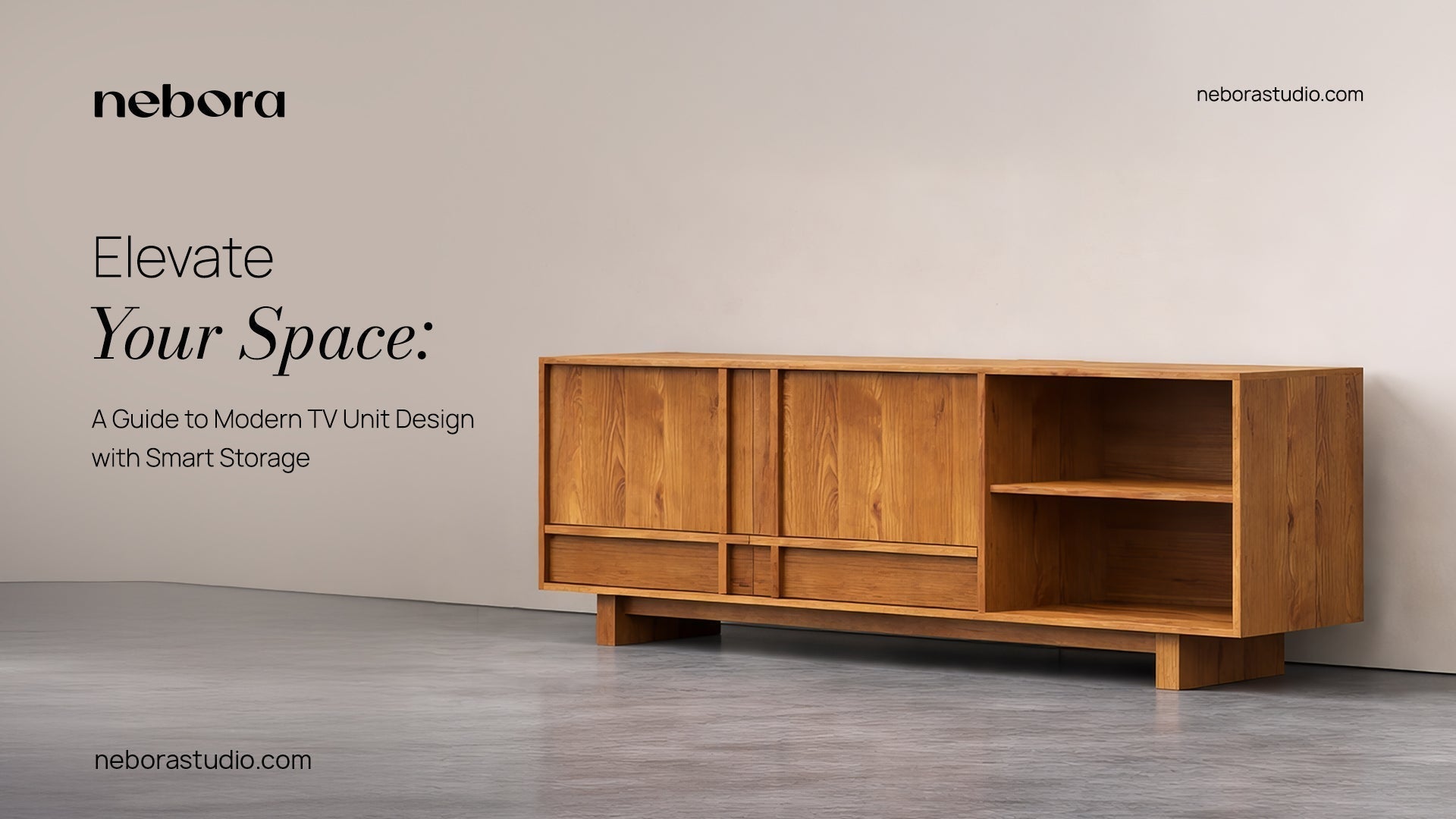
In today’s living spaces, the television is no longer just an object placed against a wall. It has become part of how rooms are organised, how families gather, and how interiors function day today. The modern TV unit, therefore, is no longer a decorative afterthought it is a spatial anchor.
At Nebora, we view the TV unit as the digital hearth of the home: a quiet, structured element that supports technology while maintaining visual calm. When designed thoughtfully, it integrates storage, proportion, and material integrity without dominating the room.
This guide explores how modern TV unit design can elevate living spaces through clarity, restraint, and intelligent storage.
The Shift from TV Units to Media Architecture
Traditional TV units were often bulky, ornamental, and visually heavy. Contemporary living demands a different approach one that prioritises balance and usability.
Modern TV units today function as:
-
Architectural elements rather than furniture add-ons
-
Organisers of technology, wiring, and accessories
-
Visual anchors that bring order to living spaces
A well-designed media unit does not compete with the room. It quietly supports it.
Key Principles of Modern TV Unit Design
1. Proportion Before Decoration
Modern TV units rely on clean geometry and careful proportions. The unit should feel aligned with the scale of the wall, seating arrangement, and screen size never oversized, never cramped.
A simple rule:
The TV unit should extend slightly wider than the television itself, creating visual grounding without excess bulk.
2. Smart Storage That Disappears
The best storage is the kind you barely notice.
Modern TV units integrate:
-
Closed compartments to hide devices and cables
-
Open sections for controlled display
-
Drawer systems that prioritise accessibility
This balance allows the unit to remain visually calm while still being highly functional.
3. Visual Lightness
Low-profile designs, recessed bases, and floating configurations help reduce visual weight. These details make the unit feel integrated into the architecture rather than placed on top of it.
This approach is especially valuable in compact living rooms, where visual openness matters.
4. Material Integrity
Rather than mixing finishes for contrast alone, modern TV units rely on material restraint. Solid wood, metal accents, and textured surfaces are used deliberately chosen for durability, tactility, and how they age over time.
Material choices should feel intentional, not decorative.
Ergonomics: Designing for Everyday Comfort
Good TV unit design is as much about comfort as it is about aesthetics.
Key considerations:
-
Viewing height: The centre of the screen should align closely with seated eye level to reduce strain.
-
Depth management: Units should accommodate devices without protruding unnecessarily into the room.
-
Cable planning: Concealed wiring channels maintain visual clarity and ease of use.
These decisions are invisible when done well and immediately noticeable when ignored.
Modern TV Units in Contemporary Living Rooms
In modern homes, the TV unit often shares space with artwork, shelving, or open layouts. This makes restraint even more important.
A modern TV unit should:
-
Complement surrounding furniture rather than dominate it
-
Align with the room’s architectural lines
-
Support both minimal and layered interiors
Neutral finishes and composed forms allow the unit to adapt as interiors evolve.
Nebora’s Approach to Media Units
At Nebora, our media units are designed as architectural responses to contemporary living rather than standalone objects. Each piece balances proportion, storage, and material honesty.
Bron Media Unit
Defined by a composed, low-profile silhouette, the Bron Media Unit anchors living spaces without visual heaviness. Its structured form allows the television to integrate seamlessly into the room, while concealed storage maintains a calm, organised presence.

Stria Media Unit
The Stria Media Unit explores linearity and contrast through refined detailing and balanced proportions. Designed to support both technology and display, it offers a structured solution for living spaces that value clarity and material depth.
These pieces are designed to function quietly allowing the room, not the furniture, to take precedence.

Choosing the Right TV Unit for Your Space
When selecting a modern TV unit, consider the following:
-
Let proportion guide your choice, not ornamentation
-
Choose materials that age well, both visually and structurally
-
Avoid overloading the unit with decor restraint enhances longevity
-
Ensure storage aligns with how you actually live, not how spaces are staged
A thoughtful TV unit should feel inevitable within the space, not imposed.
The Modern TV Unit as a Design Constant
As technology evolves, screens will change but the need for order, proportion, and calm will remain. A well-designed TV unit is not tied to trends; it is rooted in function and clarity.
By treating the media unit as a digital hearth rather than a decorative object, modern interiors gain structure without sacrificing warmth.
Explore Media Units by Nebora
Discover thoughtfully designed TV units that integrate technology, storage, and architectural clarity created for contemporary living.
FAQs
1. How do I choose the right size media unit?
Ensure the console is wider than your TV for stability and aesthetics. A general rule is to have at least a few inches of space on either side of the TV screen.
2. What is the ideal mounting height for a TV?
The center of the TV should align with your eye level when seated. For most sofa setups, this is roughly 42 inches from the floor.
3. What are common mistakes in TV mounting?
The most common "disaster" is mounting a TV too high, such as over a fireplace, or centering it on a wall without considering the viewer's eye level from the seating area.


