
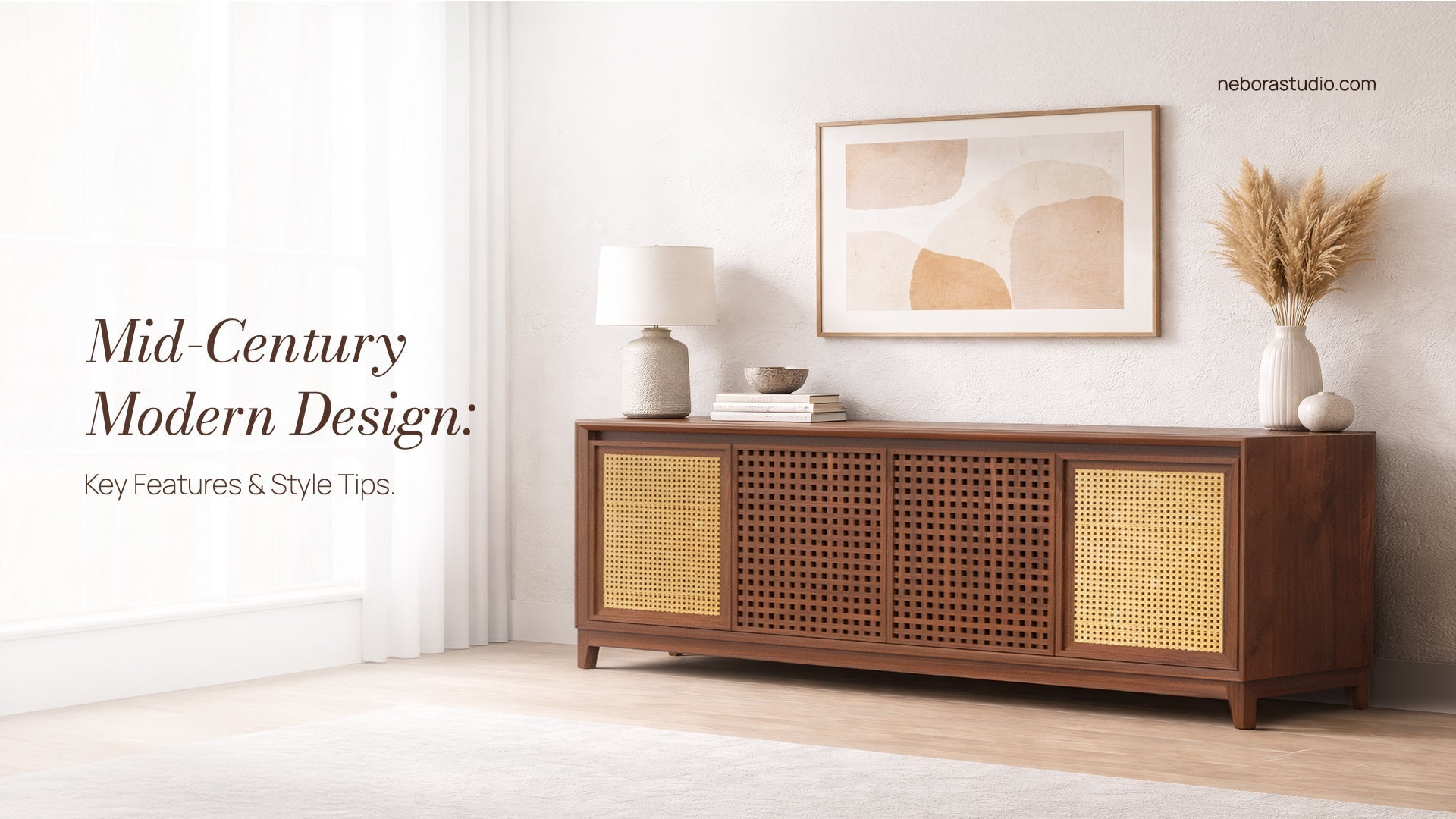
Mid-Century Modern design is not a trend that returned, it is a design language that never left.
Defined by clarity of form, honest materials, and an emphasis on function, Mid-Century Modern furniture continues to influence how contemporary homes are designed today. Its enduring appeal lies in its ability to feel structured yet warm, minimal yet inviting a balance that resonates deeply with modern living.
In this guide, we explore what Mid-Century Modern design truly represents, its defining characteristics, and how it translates into thoughtfully designed furniture for homes today.
What Is Mid-Century Modern Design?
Mid-Century Modern design emerged in the mid-20th century, shaped by architects and designers who believed that good design should be accessible, functional, and timeless. Rather than relying on ornamentation, the movement focused on proportion, material integrity, and visual balance.
In furniture, this translated into pieces that were:
-
Purposeful in form
-
Light in visual weight
-
Designed to work seamlessly with everyday life
Today, Mid-Century Modern furniture continues to feel relevant because it adapts easily to evolving interiors while retaining its original design integrity.
Key Characteristics of Mid-Century Modern Furniture
1. Clean, Balanced Silhouettes
Mid-Century Modern furniture prioritizes clear geometry and restrained profiles. Lines are simple, proportions are carefully considered, and each piece feels intentional, never excessive.
2. Honest Use of Materials
Rather than concealing materials, this design style celebrates them. Solid wood, metal accents, and textured surfaces are used thoughtfully, allowing craftsmanship and material quality to take center stage.
3. Function-First Design
Every element serves a purpose. Storage is practical, seating is comfortable, and layouts are designed to support movement and usability, making Mid-Century Modern furniture especially suited to contemporary homes.
4. Visual Lightness
Furniture often appears elevated, with tapered legs and open bases that create a sense of space. This makes the style ideal for both compact and expansive interiors.
5. A Warm, Restrained Color Palette
Natural wood tones are complemented by muted neutrals and subtle contrasts. The result is a space that feels calm, grounded, and timeless rather than trend-driven.
Mid-Century Modern Design vs Modern Design
Although often used interchangeably, the two are distinct.
-
Mid-Century Modern refers to a specific design movement with recognisable principles rooted in proportion and material honesty.
-
Modern design, as used today, is broader reflecting current trends rather than a defined philosophy.
Mid-Century Modern furniture offers greater longevity because it is anchored in design fundamentals rather than fleeting aesthetics.
How Mid-Century Modern Furniture Works in Contemporary Homes
The reason Mid-Century Modern furniture continues to thrive is its adaptability. Its restrained forms allow it to blend seamlessly with modern interiors, while its warmth prevents spaces from feeling stark or impersonal.
Whether placed in a minimalist apartment or a layered, eclectic home, Mid-Century Modern pieces act as grounding elements bringing structure, comfort, and visual coherence.
Mid-Century Modern Furniture at Nebora
At Nebora, our interpretation of Mid-Century Modern design focuses on proportion, material integrity, and everyday usability. Rather than replicating historical pieces, we translate the principles into furniture designed for how homes are lived in today.
Mid-Century Inspired Sofas
Proportion is central to Mid-Century seating. Sofas are designed with composed silhouettes, supportive comfort, and thoughtful detailing that allows them to anchor living spaces without overwhelming them as seen in the Faroe Two-Seater Loveseat Sofa, which balances elegant form with inviting comfort.

Coffee Tables with Architectural Presence
Mid-Century Modern coffee tables rely on strong geometry and material contrast. Clean profiles paired with tactile surfaces create pieces that feel sculptural yet practical much like the Columnar Coffee Table, which embodies these design principles with its refined form and thoughtful details.

Console Tables and Storage
Storage furniture in this style balances structure with lightness. Slim profiles, elevated bases, and refined detailing ensure that pieces feel integrated rather than bulky.
Each piece is designed to work independently while also contributing to a cohesive interior language.
Mid-Century Modern in 2026: A Warmer Evolution
As interiors continue to evolve, Mid-Century Modern design is becoming softer and more tactile.
We see a shift toward:
-
Warmer finishes and textures
-
Deeper, more comfortable seating
-
Subtle curves paired with structured forms
-
Materials that invite touch as much as admiration
This evolution preserves the design clarity of Mid-Century Modern furniture while making it more aligned with contemporary lifestyles.
How to Choose Mid-Century Modern Furniture for Your Home
When selecting Mid-Century Modern pieces, consider the following:
-
Focus on proportion over decoration
-
Choose quality materials that age well
-
Avoid overfurnishing let each piece breathe
-
Mix with modern elements for a balanced look
Mid-Century Modern design works best when it feels intentional rather than themed.
Why Mid-Century Modern Design Endures
The lasting appeal of Mid-Century Modern furniture lies in its clarity. It avoids excess, respects materials, and prioritizes function values that remain relevant regardless of changing trends.
In a world of constantly shifting aesthetics, Mid-Century Modern design offers something rare: stability, elegance, and quiet confidence.
Explore Mid-Century Modern Furniture at Nebora
Discover furniture shaped by proportion, material honesty, and timeless design created for contemporary living.


